
Complete Upanayan (Janeu) Sanskar Kit


Hotline Order:
Mon - Sat: 07AM - 09PM
+91-92503 03205
Pavitra Sanskar. Sampoorna Samagri. Kashi Se.
Upanayan — Janeu Sanskar, Yajnopavita Sanskar, the sacred thread ceremony — is one of the few samskaras a family performs once and remembers for decades. It is also the one where the samagri list runs past sixty items and half of them are not sold in an ordinary puja shop. Munj mekhala, palash danda, kusha aasan, kaupeen: these are ceremony-specific, and a family assembling them item by item usually discovers what is missing on the morning itself.
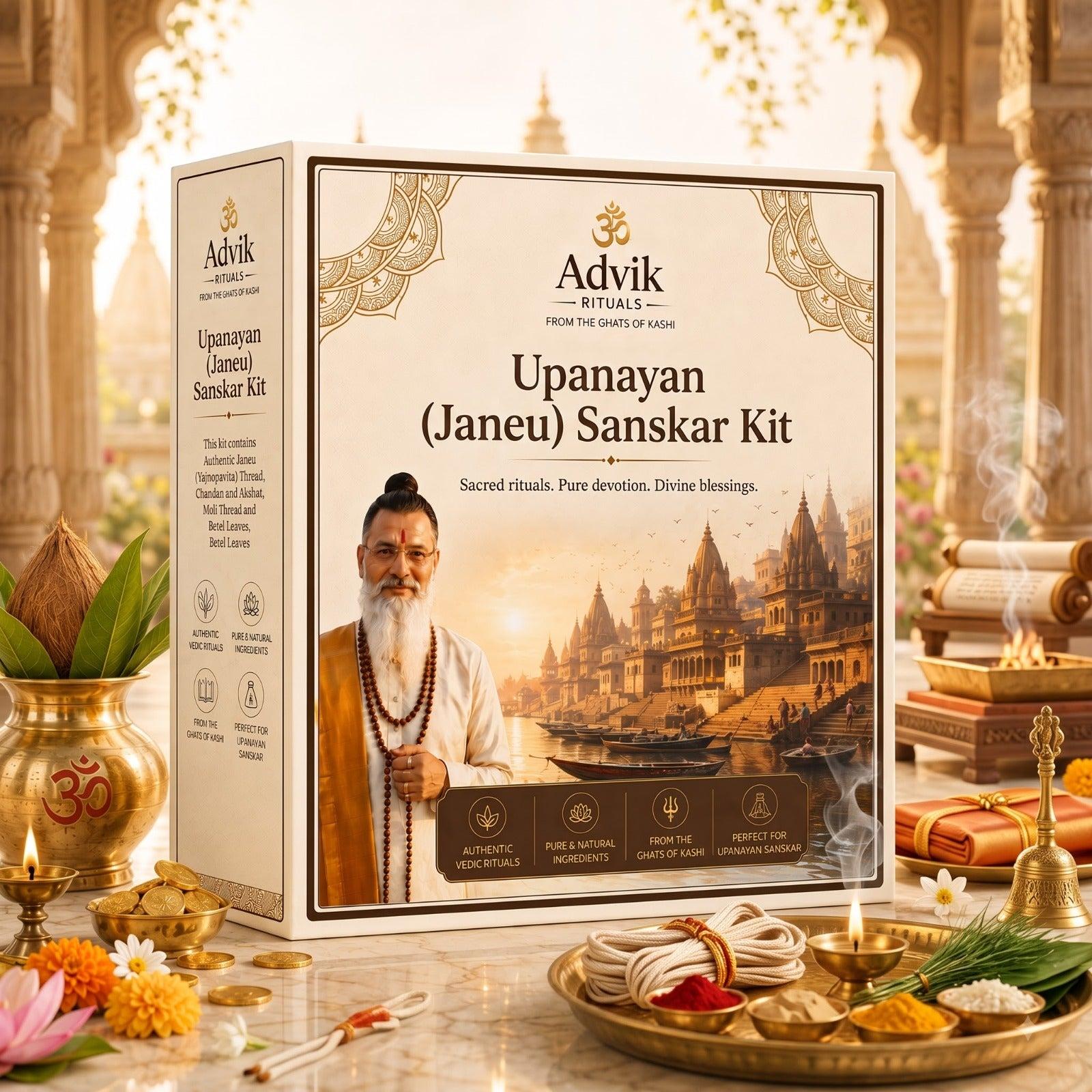
The Advik Rituals Complete Upanayan Sanskar Kit brings together 61 non-perishable essentials, curated in Kashi, organised in individually labelled packs, with a samagri checklist so you can verify against your pandit's own list well before the day.
What Is Inside — All 61 Essentials
Every weight and count below is what you actually receive.
| # | Item | हिन्दी | Quantity |
|---|---|---|---|
| Yajnopavita & Brahmachari Vestments | |||
| 1 | Premium Yajnopavita / Janeu | यज्ञोपवीत / जनेऊ | 5 pcs |
| 2 | Yellow Yajnopavita | पीला यज्ञोपवीत | 2 pcs |
| 3 | Munj Mekhala | मूँज मेखला | 1 pc |
| 4 | Kaupeen / Langoti | कौपीन / लंगोटी | 1 pc |
| 5 | Palash Danda | पलाश दंड | 1 pc |
| 6 | Yellow Bhiksha Bag | पीला भिक्षा झोला | 1 pc |
| 7 | Yellow Uttariya / Gamchha | पीला उत्तरीय / गमछा | 1 pc |
| Kusha (Sacred Grass) | |||
| 8 | Kusha Aasan | कुशा आसन | 1 pc |
| 9 | Kusha Grass | कुशा घास | 1 pack |
| 10 | Kusha Pavitra / Ring | कुशा पवित्री | 2 pcs |
| Deity, Sacred Water & Fragrance | |||
| 11 | Gauri-Ganesh | गौरी-गणेश | 1 set |
| 12 | Gangajal | गंगाजल | 100 ml |
| 13 | Rose Water | गुलाब जल | 50 ml |
| 14 | Pooja Itra | पूजा इत्र | 5 ml |
| Tilak, Anointing & Ritual Powders | |||
| 15 | Roli | रोली | 25 g |
| 16 | Kumkum | कुमकुम | 25 g |
| 17 | Haldi Powder | हल्दी पाउडर | 50 g |
| 18 | Whole Haldi | साबुत हल्दी | 50 g |
| 19 | Chandan | चंदन | 25 g |
| 20 | Sindoor | सिंदूर | 20 g |
| 21 | Bhasma | भस्म | 20 g |
| 22 | Paanch Rang Pooja Powder / Abir-Gulal | पाँच रंग अबीर-गुलाल | 1 set |
| 23 | Geru | गेरू | 50 g |
| Grains & Navdhanya | |||
| 24 | Akshat / Pooja Rice | अक्षत / पूजा चावल | 500 g |
| 25 | Barley / Jau | जौ | 100 g |
| 26 | Wheat / Gehu | गेहूँ | 250 g |
| 27 | Kala Til | काला तिल | 100 g |
| 28 | Navdhanya | नवधान्य | 100 g |
| 29 | Rice Flour | चावल का आटा | 100 g |
| 30 | Wheat Flour | गेहूँ का आटा | 100 g |
| Offerings & Naivedya | |||
| 31 | Supari | सुपारी | 11 pcs |
| 32 | Laung | लौंग | 20 pcs |
| 33 | Elaichi | इलायची | 20 pcs |
| 34 | Mishri | मिश्री | 100 g |
| 35 | Batasha | बताशा | 100 g |
| 36 | Dry Dates / Chuara | छुहारा | 50 g |
| 37 | Panchmeva | पंचमेवा | 100 g |
| 38 | Dry Coconut / Gola | सूखा नारियल / गोला | 2 pcs |
| Sacred Threads | |||
| 39 | Mauli / Kalawa | मौली / कलावा | 20 metre |
| 40 | Sacred Cotton Thread / Kachcha Soot | कच्चा सूत | 1 roll |
| Deepak, Dhoop & Light | |||
| 41 | Bambooless Agarbatti | बांस रहित अगरबत्ती | 20 sticks |
| 42 | Dhoop | धूप | 10 pcs |
| 43 | Bhimseni Kapoor | भीमसेनी कपूर | 25 g |
| 44 | Cotton Round Batti | गोल रुई बत्ती | 25 pcs |
| 45 | Long Cotton Batti | लंबी रुई बत्ती | 15 pcs |
| 46 | Clay Diya | मिट्टी के दीपक | 5 pcs |
| 47 | Matchbox | माचिस | 2 pcs |
| Havan | |||
| 48 | Hawan Samagri | हवन सामग्री | 250 g |
| 49 | Samidha | समिधा | 1 pack |
| 50 | Navagraha Samidha | नवग्रह समिधा | 1 set |
| 51 | Gomay Havan Cakes | गोमय हवन कप | 4 pcs |
| 52 | Havan Spoon / Wooden Sruk | हवन चम्मच / स्रुक | 1 pc |
| 53 | Small Disposable Havan Kund | छोटा हवन कुंड | 1 pc |
| Vessels, Cloth & Service Items | |||
| 54 | Small Clay Pots / Kalash | छोटे मिट्टी के कलश | 5 pcs |
| 55 | Red Cloth | लाल वस्त्र | 0.5 metre |
| 56 | Yellow Cloth | पीला वस्त्र | 0.5 metre |
| 57 | White Cotton Cloth | सफेद सूती वस्त्र | 1 metre |
| 58 | Disposable Dona | दोना | 10 pcs |
| 59 | Disposable Pattal | पत्तल | 5 pcs |
| Checklist & Guidance | |||
| 60 | Upanayan Sanskar Samagri Checklist | उपनयन संस्कार सामग्री सूची | 1 pc |
| 61 | Upanayan Sanskar Vidhi Guide | उपनयन संस्कार विधि पुस्तिका | 1 pc |
The Items That Are Hard to Find
Most of a puja kit is samagri you could buy anywhere. These are the ones that make the difference on the day:
- Munj mekhala — the girdle of munja grass tied at the waist, marking entry into Brahmacharya. General puja shops rarely stock it outside ceremony season.
- Palash danda — the staff of palash wood given to the brahmachari. The wood is specified; a substitute stick is not the same thing.
- Kusha aasan, kusha grass and two kusha pavitri — the seat, and the ritual rings worn on the finger during the havan.
- Kaupeen and yellow uttariya — the vestments worn after the ceremonial bath.
- Bhiksha bag — for the alms ritual that follows the initiation, when the boy asks first of his mother.
- Navagraha samidha — wood from the nine planetary trees, for the graha offerings within the havan.
- Seven yajnopavita in total — five white and two yellow, giving spares for the ceremony itself and for the periodic replacement that follows it, including at Upakarma.
What You Arrange Fresh or Locally
Perishables are deliberately excluded. They spoil in transit, they leak, and the quantities depend entirely on how many guests you are feeding. Please arrange:
Fresh flowers • Flower garland • Mango leaves • Paan leaves • Fresh coconut • Bananas and seasonal fruit • Milk • Curd • Fresh sweets • Fresh prasad • Ghee • Honey • Jaggery • Food for bhiksha and brahmin bhojan • Kalash water
A note on ghee. Traditional Upanayan lists often call for 500 g or more of cow ghee for the havan. We do not ship it — the weight, the leakage risk in transit and the packaging cost are not worth passing on to you when good cow ghee is available in every Indian city. Buy it fresh and locally.
How the Upanayana Ceremony Is Performed
Procedures vary by family, region and Vedic shakha. This is the broad North Indian sequence.
- Ganesh pujan and Punyahavachanam open the ceremony, purifying the space.
- The boy's head is shaved, he is bathed, and he is dressed in the kaupeen and unstitched cloth.
- Matru Bhojan — the last meal he eats with his mother before entering studenthood.
- The sankalp is read, naming the boy, his gotra and the samskara being performed.
- The havan is kindled. The boy is seated on the kusha aasan beside his father before the fire.
- The yajnopavita is placed over his left shoulder and under his right arm, and its three strands and knots are explained to him.
- The munj mekhala is tied at the waist and the palash danda is placed in his hand.
- The father or acharya gives the Gayatri Mantra — the Brahmopadesha, and the central moment of the entire ceremony.
- He takes the vows of Brahmacharya.
- Bhiksha follows: with the bhiksha bag, he asks alms of the women present, beginning with his mother.
- The ceremony closes with the Samidhadhanam offerings, aarti and blessings from the elders.
North Indian and South Indian Upanayanam Are Not the Same
This is worth knowing before you order. North Indian Janeu Sanskar and South Indian Upanayanam differ substantially — in garments, in the grains and vessels used, in the number of threads worn, and in the ritual accessories the acharya will ask for. This kit follows North Indian Vedic practice. If your ceremony is being conducted in the South Indian tradition, or by a sampradaya with its own requirements, share the item list on this page with your acharya first and confirm what he needs in addition.
When Upanayana Is Performed
Traditionally between the ages of eight and sixteen, with the customary age varying by community. Uttarayan — the northward passage of the sun from mid-January — is the preferred half of the year, and Vasant Panchami, Akshaya Tritiya and Upakarma are common days. The muhurat is fixed by a pandit using the boy's birth details.
Product Highlights
- Complete Upanayan / Janeu Sanskar kit — 61 curated ceremony essentials
- Seven premium yajnopavita: five white, two yellow
- Munj mekhala, palash danda and kaupeen included
- Kusha aasan, kusha grass and two kusha pavitri included
- Yellow bhiksha bag and uttariya for the alms ritual
- Complete havan set: 250 g samagri, samidha, navagraha samidha, gomay cakes, wooden sruk and a disposable havan kund
- Gangajal, chandan, roli, akshat, navdhanya and the full grain set
- Individually labelled samagri packs
- Upanayan Samagri Checklist and Vidhi Guide included
- Suitable for home, temple, dharmshala and ceremony halls
- Curated in Kashi (Varanasi)
Please Note
Upanayan / Janeu Sanskar rituals and samagri requirements may vary according to region, family tradition, gotra, Vedic shakha and the pandit or acharya conducting the ceremony. This kit contains commonly used non-perishable Upanayan Sanskar essentials. Please confirm any additional or specific requirements with your pandit before the ceremony.
About Advik Rituals
We are based in Sigra, Varanasi (Kashi). We curate complete, pandit-verified puja kits and samagri so families can perform rituals correctly without hunting for individual items. Pure ingredients. Complete vidhi. Sacred blessings.
Add your review
Your email address will not be published. Required fields are marked *
Please login to write review!
Looks like there are no reviews yet.